Regulation: FDA Replaces Potency Testing With...
CMN Clinical
Nov. 4, 2026
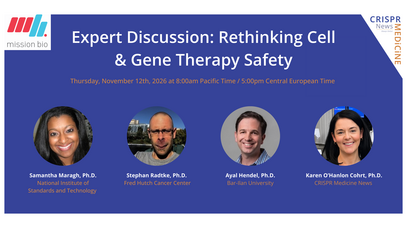
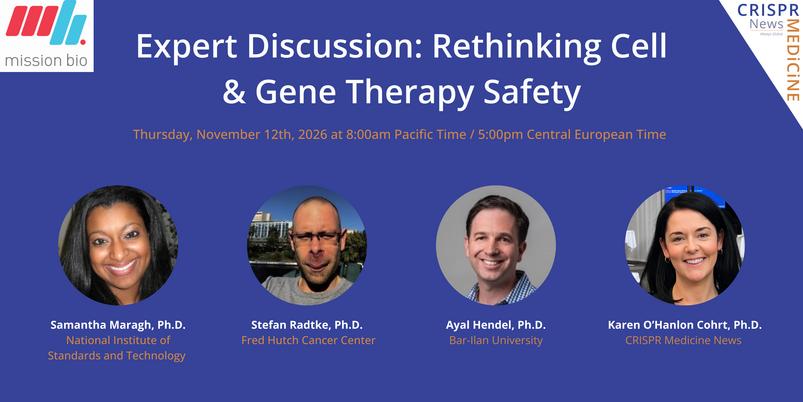
Thursday, November 12th, 2026 at 8:00am Pacific Time / 5:00pm Central European Time
Many cell and gene therapy (CGT) developers use gene editing techniques to generate the therapy or produce the desired therapeutic outcome. However, standard quality control and analytical methods miss what happens within each cell potentially compromising its safety. Bulk NGS averages variant allele frequency across pooled cells, masking whether multiple edits (on-/off-target) landed in the same cell or bystanders. Droplet digital PCR (ddPCR) and quantitative PCR (qPCR) report an averaged copy number, hiding rare high-copy cells that carry genotoxicity risk. Flow cytometry (FACS) sorts cells by surface phenotype but cannot confirm that the same cell also carries the intended edits. Fluorescence in situ hybridization (FISH) and karyotyping catch large chromosomal changes but miss smaller structural changes at the edit site.
Single-cell analysis measures on-target and off-target edits, copy number, zygosity, co-occurring edits, gene expression, and phenotype in each individual cell. This shows which cells carry a specific genetic change and how that change relates to the cell's behavior. That per-cell link between genotype and phenotype is what cell and gene therapy safety assessments need.
Join CRISPR Medicine News for a panel on where single-cell analysis stands in CGT safety today, and how single-cell analysis can shape the future of these therapies.
Stefan Radtke, Ph.D., Senior Staff Scientist, Kiem Lab, Clinical Research Division, Fred Hutch Cancer Center
Ayal Hendel, Ph.D., Professor and Principal Investigator, Genome Editing & Gene Therapy Laboratory, The Mina and Everard Goodman Faculty of Life Sciences, Bar-Ilan University
Samantha Maragh, Ph.D., Leader, Genome Editing Program, Biomarker and Genomic Sciences Group, Material Measurement Laboratory, National Institute of Standards and Technology (NIST)
Moderator: Karen O’Hanlon Cohrt, Ph.D., Intelligence Manager, CRISPR Medicine News
Submit your question in advance here and we may put it to our experts during the live discussion.

Dr. Stefan Radtke is a Senior Staff Scientist at Fred Hutchinson Cancer Center and Acting Instructor at the University of Washington in Seattle. His work focuses on advancing targeted in vivo gene therapies designed to bypass ex vivo manufacturing, HSC harvesting, and myeloablative conditioning. Over the past decade, his research in nonhuman primate models established the HSC phenotyping standards now widely used across translational biology to isolate and track repopulating stem cells. His current focus is on engineering CD90-targeted lentiviral vectors and CRISPR-edited HSCs for direct in-body modification. His work has been featured in Science Translational Medicine, Molecular Therapy, and Blood, earning an ASGCT Outstanding Abstract Award in 2022. Dr. Radtke also co-directs Fred Hutch’s Humanized Mouse Core, holds appointments at the University of Washington and Washington National Primate Research Center (WaNPRC), and serves on the ASGCT Trainee Standing Committee.

Dr. Ayal Hendel leads the Genome Editing & Gene Therapy Laboratory at Bar-Ilan University and serves as Co-Founder and CSO of Cassidy Bio. Following postdoctoral research at Stanford University where he helped pioneer the use of chemically modified guide RNAs in primary human cells, his work focused on optimizing site-specific CRISPR-Cas9 editing in hematopoietic stem and progenitor cells (HSPCs). His laboratory advances targeted gene therapies for primary immunodeficiencies such as SCID, while driving key safety innovations, including the co-development of CRISPECTOR, an advanced computational tool for quantifying low-level off-target activity and translocations. Holding a PhD from the Weizmann Institute of Science and serving on the executive committee of the Israel Society of Gene and Cell Therapy (ISGCT), Dr. Hendel provides CGT developers with essential translational strategies to maximize editing efficiency while meeting rigorous clinical safety standards.

Dr. Samantha Maragh leads the Genome Editing Program and co-leads the Biomarker and Genomic Sciences Group at NIST to advance measurement assurance and assay validation for precision medicine and cell and gene therapies. As founder of the NIST Genome Editing Consortium and a U.S. delegate to ISO/TC 276 Biotechnology, she drives collaborative international science efforts to develop control and standards for the genome editing field. Programs she manages equip cell & gene therapy developers with essential reference materials, benchmarking tools, and quality control frameworks for assay and attributes, including vector copy number and off-target editing. She holds a PhD in Human Genetics and Molecular Biology from Johns Hopkins School of Medicine.
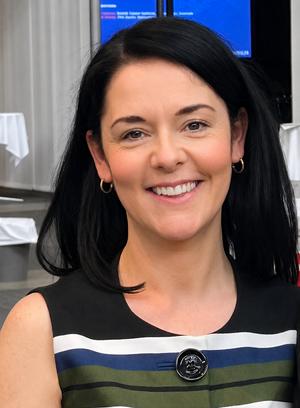
Karen O’Hanlon Cohrt is Intelligence Manager at CRISPR Medicine News (CMN), where she focuses on the clinical and translational landscape of gene editing and leads the development and curation of CMN Intelligence, including its global clinical trials database. Karen holds a 1st class honours bachelor’s degree in Biological Sciences and a PhD from Maynooth University, Ireland. She subsequently worked in academic and biotechnology research in Denmark, with experience spanning fungal genetics, cell biology and drug discovery. Her scientific background is complemented by more than 10 years of experience in scientific writing, editing and communication. At CMN, Karen brings these perspectives together to track the development of gene-editing technologies from research to the clinic, with a particular focus on therapeutic pipelines, clinical trials and the evolving global gene-editing landscape.

Mission Bio is the single-cell multiomics leader. The company's Tapestri Platform is unique in its capabilities, offering an unparalleled level of granularity and precision that is critical for complex research areas such as cancer studies, pharmaceutical development, and advanced cell and gene therapies. Unlike traditional standard of care methods, Tapestri provides a level of precision that opens the door for more tailored and effective treatment strategies, notably by advancing the clinical utility of measurable residual disease (MRD) monitoring in diseases like acute myeloid leukemia (AML). Researchers globally depend on Tapestri to identify rare cell populations, understand mechanisms of therapeutic resistance and response, and establish key quality metrics for next-generation medical treatments. With the Tapestri Platform, Mission Bio continued to set the standard in the field, contributing significantly to the progress of personalized medicine and targeted therapies. To learn more about Mission Bio and the Tapestri Platform, please visit missionbio.com.
If you have any questions or request for webinars, please contact us at: sales@crisprmedicinenews.com
Future CMN Webinars will be listed here.
Always stay updated - Sign up to weekly newsletter.