CMN Weekly (25 September 2026) - Your Weekly CRISPR Medicine News
By: Gorm Palmgren - Sep. 25, 2026
Top picks
- Prime assembly is a new approach that uses CRISPR-Cas-targeted dual-flap synthesis to assemble and integrate medium-to-large DNA sequences at programmed genomic sites in human cells. The method accepts single- or double-stranded DNA fragments and functions in dividing and non-dividing cells without double-strand breaks or homology-directed repair. Researchers demonstrated exon recoding, transgene insertion and megabase-scale rearrangements, including at therapeutically relevant loci in primary human cells.
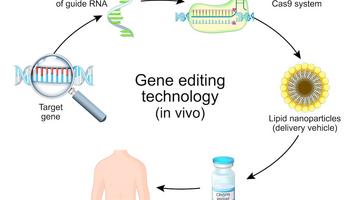
- The US FDA has accepted Intellia Therapeutics’ application for lonvoguran ziclumeran (lonvo-z, formerly NTLA-2002) and granted the in vivo CRISPR-Cas therapy priority review. In a company-reported phase 3 trial, a single dose reduced hereditary angioedema attacks by 87% compared with placebo.
Clinical and preclinical
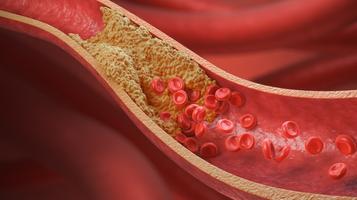
- CRISPR Therapeutics' CRISPR-Cas9 therapy CTX310 has produced sustained lipid lowering for one year after a single intravenous infusion in a Phase 1a dose-escalation study involving 15 patients with uncontrolled dyslipidaemias. At 0.8 mg/kg, mean ANGPTL3, triglyceride and LDL reductions were 79%, 48% and 53%, respectively. No new treatment-related safety events emerged during extended follow-up; larger Phase 1b studies are ongoing.
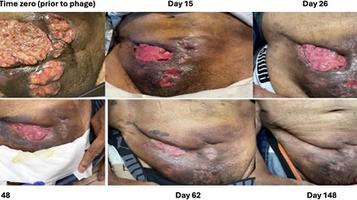
- SNIPR has dosed the first patient with its CRISPR-Cas-armed phage therapeutic SNIPR001, starting the Phase 2 portion of a Phase 1b/2a trial evaluating prevention of Escherichia coli bloodstream infections in haematopoietic stem-cell transplant recipients. Forty-two additional patients will expand enrolment to 66 across ten sites. The study follows reported safety and target engagement in healthy volunteers; efficacy results are expected in the second half of 2027.
- Prime Medicine has received FDA clearance to begin a Phase 1/2 trial of PM647, a lipid nanoparticle-delivered in vivo prime editor designed to correct the SERPINA1 PiZ mutation in alpha-1 antitrypsin deficiency (AAT). The first-in-human, single-arm dose-escalation study will initially enrol adults with lung disease, then expand to patients with liver involvement after tolerability is established. Mouse studies reportedly restored M-AAT to the healthy range.
- YolTech's adenine base editor YOLT-202 corrected the PiZ mutation in four patients with severe alpha-1 antitrypsin deficiency in an open-label Phase 1 trial. A single 45 mg dose raised mean serum AAT from approximately 5 to 20 µM, remaining above the protective threshold through six months. Biopsy showed up to 57% target-site editing without detected off-target or bystander edits, while transaminase elevations were transient.
- Beam Therapeutics' lipid nanoparticle-delivered adenine base editor BEAM-302 corrected the PiZ mutation in an open-label Phase 1/2 trial of alpha-1 antitrypsin deficiency. Among 29 single-dose recipients, 60 mg durably raised total AAT above the protective threshold, reduced mutant Z-AAT by 84% and made corrected M-AAT 93% of circulating AAT. Infusion reactions affected 41%; one patient had transient grade 3 aminotransferase elevations.
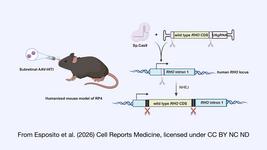
- A mutation-agnostic CRISPR-Cas strategy that inserts a functional rhodopsin coding sequence into the human RHO locus has preserved retinal structure, function and visual acuity for a full year in a semi-humanised mouse model of dominant retinitis pigmentosa. The decisive variable turned out to be not the nuclease but the architecture of the donor DNA – the first design was silenced by a cellular surveillance pathway, and only a rebuilt cassette yielded therapeutic protein. Also, read our take on the story.
- A single dose of nChroma Bio's epigenetic silencer CRMA-1001 cut hepatitis B virus biomarkers by more than 3 log10 in preclinical mouse models, with reductions tracking de novo methylation of viral DNA. Three doses of the dCas9-based CRMA-1001 left up to 90% of animals free of detectable surface antigen and HBV DNA at six months. In non-human primates, liver transaminases rose only transiently at the highest dose.
- Allotera Therapeutics' CRISPR-Cas9-edited allogeneic CAR-T therapy sofi-cel will be evaluated in a newly opened cohort of the pivotal Phase 2 T-RRex study for patients with T-ALL or T-LBL who remain MRD-positive after standard treatment. Healthy-donor T cells are edited to delete CD7 and TRAC, aiming to prevent fratricide and graft-versus-host disease. The single-arm, open-label study across 18 US and Australian sites will assess conversion to MRD-negative remission.
Research
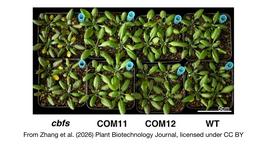
- Rationally engineered chimeric attachment sites raise the efficiency with which the serine integrase Bxb1 inserts large DNA cassettes into targeted loci in both human cells and rice. Paired with an evolved Bxb1 protein variant, the optimised system reached 31% integration for a CD19 CAR cassette in HEK293T cells and produced stably edited rice plants carrying a 5.8-kb herbicide-resistance insert.
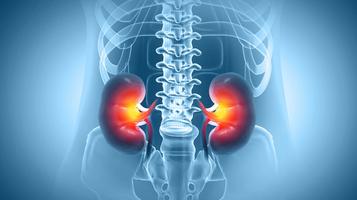
- A gene-edited pig kidney kept a patient with end-stage kidney disease dialysis-free for 271 days, then failed and was removed without leaving the recipient sensitised against human donors. Eighty-two days later, a human kidney transplant functioned immediately, with no sign of sensitisation through 231 days of follow-up.
- Packing chemical modifications throughout the prime editing guide RNA, rather than only at its ends, raised editing in mouse liver to 67% after a single lipid nanoparticle injection. At a clinically translatable dose, the modified guides edited Pcsk9 nearly 80 times more efficiently than conventional end-modified pegRNAs, cutting serum Pcsk9 by 96%.
- A UCL-led team has developed a clinical-scale CRISPR-Cas9-AAV6 workflow intended to correct Wiskott-Aldrich syndrome in haematopoietic stem and progenitor cells, reaching 61% knock-in in more than 100 million CD34+ cells. Tested in mice, the approach preserved cell function and showed limited genotoxicity, although the corrected fraction declined after transplantation and rare donor-specific alterations underline the need for long-term monitoring.
- RNA-targeting CRISPR-Cas guide RNAs can co-purify with extracted RNA and inhibit RT–qPCR, causing knockdown efficiency to be overestimated when amplicons span or lie upstream of the guide-binding site. The artefact occurred across all tested CRISPR-Cas systems. The authors recommend processive reverse transcriptases with strong strand-displacement activity and orthogonal validation methods to ensure accurate quantification of RNA depletion.
- A nuclease-inactive CRISPR-Cas9 system increased endogenous expression of two protective HDL components without cutting genomic DNA. In a small mouse study, activating Apoa1 or Pon1 reduced thoracic-aortic lipid deposits by 50% and 39%, respectively.
Industry
- Cellectis reports that it is shifting its focus to two preclinical, lipid nanoparticle-delivered in vivo gene-editing candidates for severe dyslipidaemias. .HEAL-101 uses TALE base editing of APOC3 and reduced triglycerides by 76% in a transgenic mouse model. .HEAL-201 epigenetically represses PCSK9 and lowered circulating PCSK9 by >90% in humanised mice. Chinese Phase 1 trials are planned, with preliminary data expected in 2027 and 2028; development of two allogeneic CAR-T candidates will end.
- Modalis Therapeutics has received a US Notice of Allowance for patent claims covering treatment of muscular dystrophy by targeting and regulating DMPK. The application relates to MDL-202, an investigational CRISPR-Cas-based epigenome-editing therapy designed to suppress transcription of expanded-repeat DMPK without cutting or altering DNA. The company says the allowance strengthens intellectual-property protection for its potential treatment of myotonic dystrophy type 1.
- Eligo Bioscience has raised $20 million to develop eligobiotics: programmable DNA-protein delivery vehicles intended to identify and enter selected bacterial strains. The platform could carry CRISPR-Cas payloads to eliminate pathogenic bacteria while sparing other microbiome members, or enable transient drug production.
Delivery
- Delivering CRISPR-Cas9 as mRNA in lipid nanoparticles preserved the fitness and erythroid potential of edited human haematopoietic stem and progenitor cells better than electroporation. Although editing was less efficient, fetal haemoglobin induction was sufficient to reduce hypoxia-induced sickling in patient-derived red blood cells in vitro.
- Delivering a CRISPR-Cas-derived adenine base editor as a short-lived protein-guide RNA complex enabled efficient PCSK9 editing while human embryos developed to blastocysts. By contrast, mRNA delivery caused widespread early arrest, showing that the duration and form of editor exposure strongly shape both efficacy and toxicity.
Perspectives
- An Editorial in The Lancet urges the gene-editing field to reassess safety after two deaths in Chinese trials targeting the brain and muscle, apparently linked to high-dose AAV toxicity. It calls for greater scrutiny of delivery vectors, multidisciplinary expert oversight of new trials, responsible dosing and immediate disclosure of serious adverse events, warning that weak risk management and transparency could undermine both patients and therapeutic progress.
- A Nature news report examines the deaths of two children in separate gene-editing trials in China and the implications for research oversight. Researchers, ethicists and legal scholars argue that delayed public disclosure exposed weaknesses in transparency and regulation. Although strengthened Chinese laws could require faster reporting of future deaths, the cases risk damaging trust in both the country’s biomedical sector and therapeutic genome editing.
- In a Q&A in Nature Biotechnology, three distinguished scientists assess emerging technologies for installing large genetic cargoes. They discuss recombinases, CRISPR-associated transposases, genome-writing systems and retrotransposons, comparing their therapeutic potential with barriers including low efficiency, delivery constraints, immunogenicity and unintended genomic effects. They highlight the advances in specificity, payload delivery, control and safety assessment needed for clinical translation.
Reviews
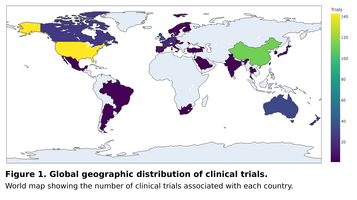
- The landscape and trajectory of global CRISPR therapeutics. This review maps the global CRISPR therapeutic landscape through a systematic analysis of CRISPR-based trials on ClinicalTrials.gov and the EU Clinical Trials Register, setting out the technical, regulatory, manufacturing and economic constraints that still limit broad clinical use.
To get more CRISPR Medicine News delivered to your inbox, sign up to the free weekly CMN Newsletter here.
Tags
ArticleMissing linksNewsCMN WeeklyIn vivoLipid-based nanoparticleHereditary angioedema, HAECas9Beam Therapeutics Inc.Cellectis S.A.Chroma MedicineCRISPR Therapeutics AGEligo BioscienceIntellia Therapeutics, Inc.Modalis TherapeuticsSNIPR BiomeWUGEN Inc.YolTech TherapeuticsClinical