Preclinical: Prime Editing Restores...
CMN Special
Oct. 7, 2026
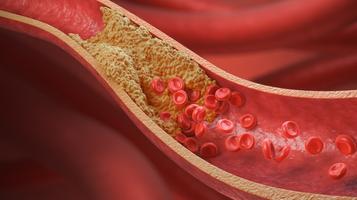
Most attempts to exploit HDL's anti-atherosclerotic properties have relied on infusing HDL mimetics, an approach that has repeatedly failed in patients, partly because infused apolipoprotein A1 is short-lived and prone to oxidation. The Bucharest group took the opposite route and raised the endogenous supply instead.
The team used a transcriptional activator that combined dCas9-VP64 with guide RNAs recruiting additional activation domains. In human Huh7 hepatocytes, it increased APOA1 or PON1 expression and protein secretion, while APOA1-enriched conditioned medium reduced oxidative and inflammatory responses in TNFα-stimulated endothelial cells.
Thirty-week-old male Apoe-deficient mice received a single intravenous dose of the relevant plasmids complexed with a transfection reagent. After 30 days, hepatic and circulating APOA1 or PON1 remained elevated. Apoa1 activation increased HDL cholesterol and markers of hepatic cholesterol excretion, whereas Pon1 activation reduced lipid peroxidation. Both interventions lowered inflammatory markers and macrophage content in aortic-root lesions.
The findings demonstrate CRISPR-mediated gene activation rather than permanent genome editing. Interpretation is limited by five mice per group, a 30-day experiment, pooled lipoprotein samples and the absence of genome-wide off-target analysis. The laboratory plasmid-delivery system is also not immediately suitable for clinical use.
The study was led by Laura Toma, Teodora Barbălată and Camelia Sorina Stancu at the Romanian Academy. It was published in Molecular Biomedicine on 18 September 2026.
To get more CRISPR Medicine News delivered to your inbox, sign up to the free weekly CMN Newsletter here.
ArticleCMN BriefsNewsCMN BriefsIn vivoMicroinjectionDyslipidemiaCardiovascular diseasesdCas9CRISPRaPre-clinical