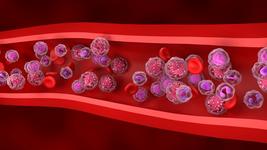
CD28-Targeted Car T Cells Curb T-ALL and Spare...
CMN Briefs
Oct. 9, 2026

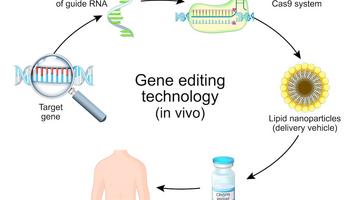
REPLACE uses two guide RNAs to direct SpCas9 to either side of a selected genomic region. After the intervening sequence is excised, a double-stranded donor without homology arms is inserted through non-homologous end joining. Engineered virus-like particles delivered Cas9-guide RNA complexes, while adeno-associated viruses supplied the donor DNA.
The method replaced Actb exons with a reporter in approximately 35 per cent of primary mouse hepatocytes and 20 per cent of hepatocytes in vivo. In mouse zygotes, it replaced a 27-kb Ace2 region with the human ACE2 coding sequence in two of 64 offspring; the allele was transmitted through the germline and retained tissue-specific expression.
In post-mitotic cardiomyocytes derived from patient iPSCs, REPLACE corrected a frameshift mutation in LMNA in 13 per cent of long sequencing reads and restored Lamin A/C expression. However, 41 per cent of reads contained an inverted endogenous exon, 17 per cent carried a deletion and 5.5 per cent contained AAV backbone sequence. One predicted off-target site showed 1.8 per cent editing. Genome-wide off-target and chromosomal-rearrangement analyses remain necessary, and the work has not been peer-reviewed.
The study was led by Tu Dang, Alexandra Roman and Ralf Kühn at the Max Delbrück Center for Molecular Medicine. It was published in bioRxiv on 24 July 2026.
To get more CRISPR Medicine News delivered to your inbox, sign up to the free weekly CMN Newsletter here.
ArticleCMN BriefsNewsCMN BriefsIn vivoAdeno-associated virus (AAV)Virus-like particle (VLP)Cas9