Your missing links are here (11 December 2020)
By: Gorm Palmgren - Dec. 11, 2020
CMN Intelligence - The World’s Most Comprehensive Intelligence Platform for CRISPR-Genomic Medicine and Gene-Editing Clinical Development
Providing market intelligence, data infrastructure, analytics, and reporting services for the global gene-editing sector. Read more...
Top picks
- A breakthrough in CRISPR therapy was presented this week at the 62nd ASH Annual Meeting and in the New England Journal of Medicine when Vertex Pharmaceuticals and CRISPR Therapeuticsshared positive clinical data for their ex vivo CRISPR-based therapy CTX001. The treatment is a one-time curative treatment for severe sickle cell disease (SCD) and blood transfusion-dependent beta-thalassemia (TDT), and the new data points to a potential cure for the two inherited blood diseases. Read our own coverage of the news here or have a look at Science's take at it here.
Research
- Californian researchers have developed a technique, CiBER-seq, that uses quantitative CRISPRi profiling of expression phenotypes to dissects genetic networks. In this way, CiBER-seq produces comprehensive phenotypic profiles that offer insights into gene function and regulation.
- Russian researchers have identified a more compact Type II-C Cas9 from the thermophilic bacteria Pasteurella pneumotropica. The so-called PpCas9 is 24 amino acids shorter than SpCas9 and notably is shown to be active in human cells.
Industry
- Sherlock Biosciences have discovered a new thermostable Cas nuclease that enables real-time detection of RNA and or DNA targets, the company says in a press release. The new Cas nuclease will have broad implications for the SHERLOCK™ CRISPR-based method to detect and quantify specific genetic sequences that are already used for Covid-19 diagnosis.
- In another press release from Sherlock Biosciences, the company announced a new exclusive licensing agreement with Shanghai-based Tolo Biotech. Tolo has given Sherlock exclusive rights in the United States to its CRISPR-Cas12 diagnostic technology, and Sherlock has granted Tolo exclusive rights to the CRISPR-Cas13 SHERLOCK™ diagnostic platform in Greater China.
- Investors' expectations were building up to the positive clinical data that were released this week for CRISPR Therapeutics' CRISPR-based therapy CTX001 against severe sickle cell disease and beta-thalassemia. The expectations have caused the stock to almost double in price during the last two months, and investors are speculating that it could go as high as $170 - that is 16% higher than today.
- The stocks of other CRISPR companies have surged as well after presenting promising data at the 62nd ASH Annual Meeting (see below). Editas has surged more than 40% so far this week, while Intellia gained 15%.
- A decision from the European Patent Office has turned down the Broad Institute in their CRISPR patent fight against Novozymes, CRISPR Therapeutics and several others. Almost one year ago, the Broad Institute appealed a decision by the EPO to revoke its entirety European Patent No. EP 2771468, but this decision has now been reaffirmed.
Clinical Trials
- Precision BioSciences have reported preliminary data from its clinical trial using meganucleases aginst r/r non-Hodgkin lymphoma and r/r B-cell acute lymphoblastic leukemia. You can read about the clinical trial in our comprehensive database.
- You can find updates on many more clinical trial under the heading 62nd ASH Annual Meeting below.
Covid-19
- A team of scientists from California have developed a new CRISPR-Cas13a-based Covid-19 test that uses your smartphone camera as a portable fluorescence microscope to quantify the fluorescent signal generated by the Cas13a direct detection assay. You can also read about the new device here.
Vison and Opinion
- An interesting article in Berkley News describes how students are attracted to the labs of Nobel Prize winners. A substantial part of the article covers the lab of CRISPR-heroine Jennifer Doudna.
- This week, the Pew Research Center published a global survey of more than 32,000 people on their attitude towards gene editing and biotechnology research. The study found an international hostility to gene-editing, primarily among Christians. You can read the original report here.
Pioneers
- In case you missed it, Nobel laureate Jennifer Doudna guested the "Women in Science" web series last month. Among the topics that Doudna brought up was how to celebrate a Nobel Prize in a pandemic, what the award means for women in science, and her views on mentorship. You can read a lightly edited transcript of the interview here.
Reviews
- Good news for potato coaches: Norwegian researchers argue that CRISPR and other gene editing techniques are the most effective method to achieve health benefits you typically gain through physical exercise. You can read the original review here.
62nd ASH Annual Meeting
- The 62nd American Society of Hematology (ASH) annual meeting took place virtually last weekend (December 5-8, 2020). Register for free and check out the many poster presentations and oral abstracts in the Gene Editing, Therapy and Transfer sessions.
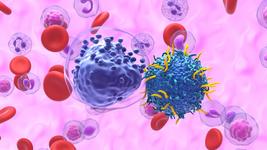
- At the ASH meeting, Intellia Therapeutics presented new preclinical data for its CRISPR-based T cell receptor therapy candidate for the treatment of acute myeloid leukaemia (AML). You can read about the preclinical trial in our comprehensive database.
- Beam Therapeutics also presented updated data from its base editing programs for sickle cell disease at the meeting. The new data support the opportunity for the company's base editors to offer potentially disease-modifying treatments for people with sickle cell disease.
- Editas Medicine presented new data on another potential treatment for sickle cell disease and ß-thalassemia. The company's EDIT-301 is an experimental, autologous cell therapy medicine and the new data showed that it led to robust fetal haemoglobin (HbF) induction in the patients' erythroid progeny. You can read about the preclinical trial in our comprehensive database.
- Editas Medicine also announced the submission of an FDA application for the initiation of a Phase 1/2 clinical trial of the EDIT-301 treatment mentioned above.
- Cellectis reported their first publicly released data from the company's phase 1 study of its TALEN gene-edited allogeneic CAR T-cells against B-cell acute lymphoblastic leukaemia. You can read about the clinical trial in our comprehensive database.
- Preclinical findings from another TALEN-based allogeneic CAR T-cell therapy was presented at the ASH meeting by Allogene Therapeutics. The ALLO-605 medicine is targeting the B-cell maturation antigen and is intended for treatment of relapsed/refractory multiple myeloma.
- Yet another TALEN-based allogenic CAR T-cell therapy was presented at the meeting by Allogene Therapeutics, but this time targeting acute myeloid leukaemia.
Heh, huh wow
- In a lengthy Wall Street Journal op-ed, John Ratcliffe, the US director of national intelligence, claims that China has conducted "human testing" on members of the People's Liberation Army in the hope of developing soldiers with "biologically enhanced capabilities." Intelligence suggests the Chinese most certainly uses CRISPR to achieve this goal. You can read also read about the remarkable claim on NBC News here.
- In an interesting piece in MIT Technology Review, Antonio Regalado details a large project that is underway to disease-proof pigs by using CRISPR to change their DNA. And he wonders if people are next in line?
Tags
CLINICAL TRIALS
IND Enabling
Phase I
Phase II
Phase III
Gastric Cancer and Colorectal Cancer, CRC, (NCT07166263)
Sponsors:
Base Therapeutics (Shanghai) Co., Ltd.
Sponsors:
Base Therapeutics (Shanghai) Co., Ltd.
IND Enabling
Phase I
Phase II
Phase III
Relapsed or Refractory Acute Myeloid Leukemia, AML, (NCT06541444)
Sponsors:
Base Therapeutics (Shanghai) Co., Ltd.
Sponsors:
Base Therapeutics (Shanghai) Co., Ltd.
IND Enabling
Phase I
Phase II
Phase III