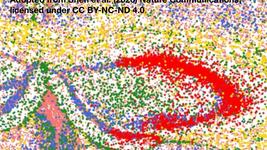
Spatial CRISPR maps gene effects in the brain
CMN Briefs
Feb. 23, 2026

CMN Intelligence - The World’s Most Comprehensive Intelligence Platform for CRISPR-Genomic Medicine and Gene-Editing Clinical Development
Providing market intelligence, data infrastructure, analytics, and reporting services for the global gene-editing sector. Read more...
“As a novel epigenetic silencer, I am enthusiastic about the promising potential of CRMA-1001 to achieve a functional cure for persons living with HBV”Man-Fung Yuen, principal investigator at The University of Hong Kong
The dosing event places nChroma's lead programme at the forefront of a strategic shift in both HBV and CRISPR medicine – away from permanent genome modification or transient RNA suppression, and toward durable transcriptional control without DNA cleavage. For a disease affecting more than 250 million people globally, where current therapies achieve functional cure in fewer than 5% of patients, CRMA-1001 represents a mechanistically distinct approach designed to shut down viral antigen production at its transcriptional source.
»We are proud to reach this important clinical milestone,« said Jeff Walsh, Chief Executive Officer of nChroma Bio. »Dosing the first participant in our Phase 1/2 study is a key step toward evaluating CRMA-1001's potential to provide clinically meaningful and durable responses for people living with chronic HBV, a disease that affects hundreds of millions worldwide and for which existing treatments are rarely curative.«
The regulatory clearances span three jurisdictions. Hong Kong's Certificate for Clinical Trial, granted in December 2025, enabled the first dosing, with Professor Man-Fung Yuen of The University of Hong Kong serving as principal investigator. Subsequent approvals in New Zealand and the United Kingdom are now supporting site activations and patient enrolment across a geographically diverse clinical programme.
“Dosing the first participant underscores the progress we've made in advancing our highly optimised and potentially best-in-class epigenetic silencer”Jenny Marlowe, Chief Development Officer of nChroma Bio
CRMA-1001 employs a catalytically inactive Cas9 (dCas9) fused to proprietary epigenetic effector domains that induce targeted DNA methylation at viral loci, silencing gene expression without introducing double-strand breaks. The therapy targets both covalently closed circular DNA (cccDNA) – the persistent episomal reservoir underpinning HBV chronicity – and integrated HBV DNA embedded in the host genome. By methylating these viral sequences, CRMA-1001 aims to achieve durable suppression of hepatitis B surface antigen (HBsAg) and viral DNA, potentially enabling finite-course treatment rather than lifelong suppression.
Avoiding permanent genome modification may reduce off-target risks while maintaining durability that transient RNA-based modalities such as siRNA or antisense oligonucleotides typically cannot sustain. For HBV specifically, where functional cure requires sustained control of both cccDNA transcription and integrated viral sequences, the epigenetic mechanism offers a plausible approach to simultaneously address both reservoirs.
Preclinical validation presented at The Liver Meeting in November 2025, where CRMA-1001 datasets earned a Poster of Distinction, demonstrating greater than three-log reductions in HBsAg across transgenic and AAV-HBV mouse models, with durability extending to at least six months. At the highest dose, up to 90% of treated mice exhibited undetectable levels of both HBsAg and HBV DNA. Non-human primate studies using PCSK9 as a surrogate liver target demonstrated sustained gene silencing for more than one year following a single dose, with acceptable biodistribution, specificity, and safety profiles.
»Hepatitis B remains a major global public health challenge that can lead to life-threatening conditions such as cirrhosis and liver cancer,« said Yuen when the Hong Kong clearance was announced. »As a novel epigenetic silencer, I am enthusiastic about the promising potential of CRMA-1001 to achieve a functional cure for persons living with HBV.«
“We are proud to reach this important clinical milestone”Jeff Walsh, Chief Executive Officer of nChroma Bio
The Phase 1/2 trial (NCT07200193) will evaluate safety, tolerability, pharmacokinetics, pharmacodynamics, and efficacy across single-ascending and multiple-ascending dose cohorts in adults with chronic hepatitis B. While functional cure remains aspirational, early antiviral activity signals – particularly sustained HBsAg reduction – will indicate transcriptional silencing efficacy.
»Dosing the first participant underscores the progress we've made in advancing our highly optimised and potentially best-in-class epigenetic silencer,« said Jenny Marlowe, Chief Development Officer of nChroma Bio. »We look forward to generating early clinical insights that will inform the future development of CRMA-1001 and potentially reshape the therapeutic landscape for chronic hepatitis B.«
If clinical data validate preclinical durability and safety, CRMA-1001 could establish epigenetic gene regulation as a third therapeutic modality alongside traditional gene editing and RNA-based suppression. For the HBV field, success would mark a significant advance beyond nucleos(t)ide analogues and interferons that rarely achieve functional cure.
The multi-jurisdictional strategy positions nChroma to accelerate enrolment and generate geographically diverse data – a pattern increasingly common among genetic medicine developers seeking to compress development timelines. The rapid progression from regulatory clearance to first dosing, combined with simultaneous site activations across three countries, suggests adequate capitalisation for near-term clinical operations.
Clinical data from the Phase 1/2 study are anticipated in late 2026, with interim readouts potentially available earlier depending on enrolment kinetics and dose-escalation timelines.
The report is based on press releases from nChroma Bio on 28 January 2026 and 16 December 2025. Also check out our recent CMN Clinical on CRMA-1001.
To get more CRISPR Medicine News delivered to your inbox, sign up to the free weekly CMN Newsletter here.
ArticleCMN HighlightsNewsClinical News UpdatesHepatitis B virusLiver diseasesEpigenome editing (e-GE)dCas9Chroma MedicineClinical