Your Missing Links Are Here (16 April 2021)
By: Gorm Palmgren - Apr. 16, 2021
CMN Intelligence - The World’s Most Comprehensive Intelligence Platform for CRISPR-Genomic Medicine and Gene-Editing Clinical Development
Providing market intelligence, data infrastructure, analytics, and reporting services for the global gene-editing sector. Read more...
Top pick
- CRISPR-Cas9 genome editing can lead to unintended mutations at the targeted section of DNA in early human embryos, according to researchers at the Francis Crick Institute. Unintended outcomes in a 4-20 kb region occurred in ∼16% of the human embryo cells analysed and included loss of heterozygosity in edited cells.
- A new gene-editing technology called CRISPRoff allows transient, light-controlled gene expression. CRISPRoff is developed by Whitehead Institute researchers and utilises a dead Cas9 fusion protein that establishes DNA methylation and repressive histone modifications. The technology should not be confused with a similarly named technology by Synthego that enables light-controlled gene editing, which we wrote about last year.
Research
- Reporting in Nature Genetics, American researchers show that CRISPR–Cas9 editing generates extensive chromosome rearrangements in a mutational process called chromothripsis. Chromothripsis can cause human congenital disease and cancer, and its consequence of CRISPR-Cas9 in clinical use should be considered and monitored.
- A new approach for alleviation of allergic reactions uses CRISPR mediated disruption in dendritic cells of a novel molecular target, VPS37B. Nasal administration in mice of edited dendritic cells resulted in strongly reduced allergic symptoms.
- Researchers at Imperial College London have used CRISPR-Cas9 to minimally edit endogenous genes of the malaria-transmitting mosquitoes and thereby turn them into non-autonomous gene drives.
Industry
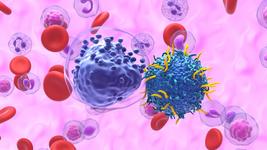
- CRISPR Therapeutics has presented new preclinical data on its novel CRISPR-Cas9 mediated CD70 knockout approach to augment CAR-T cell function. CD70 is an immunosuppresive ligand, and its knockout showed improved potency and persistence of CAR-T cells.
- The first patient has been dosed with ALLO-715 that utilises Allogene Therapeutics' proprietary TALEN gene-editing technology for allogeneic CAR-T therapy of relapsed or refractory multiple myeloma. The move is part of the UNIVERSAL phase 1 trial.
- Gracell Biotechnologies has presented promising long-term follow-up data of GC027 to treat relapsed/refractory T-cell acute lymphoblastic leukaemia. GC027 is manufactured using T cells from non-HLA matched healthy donors using CRISPR gene editing to avoid graft-vs-host immune rejection.
- Precision BioSciences has started a process to reacquire all global rights for its CAR-T cell partnered programs. The company owns the ARCUS genome editing platform that utilises the homing endonuclease I-CreI.
- Cellectis - a clinical-stage gene-editing company - has raised $47 Mio through an ATM program that aggregate 2,415,630 new shares.
- Tango Therapeutics - that takes a CRISPR-focused search for new cancer genes - has raised $353 Mio in a so called SPAC deal with Boxer Capital, a blank-check company.
Vision and opinion
- Stay updated in the continuing CRISPR patent saga between the Broad Institute and "CVC" (California, Vienna, Charpentier) groups in this opinion editorial by Kevin Noonan, who is a partner at the science-oriented law firm McDonnell Boehnen Hulbert & Berghoff.
- The organisation Fight for Sight has funded new research at University College London to use base editing to directly repair disease-causing mutations in photoreceptor cells in human models of inherited retinal diseases. Earlier this week, we gave an update on CRISPR-based approaches to therapies for Leber congenital amaurosis that is the leading cause of childhood blindness.
Reviews
- A review in Molecular Therapy looks at CRISPR and other gene editing or gene therapy strategies for ALS (amyotrophic lateral sclerosis) treatment. The first study using CRISPR in ALS was published in 2017 and targeted the SOD1 gene.
Clinical trials
- At the Innovative Genomics Institute founded by Nobel Prize winner Jennifer Doudna, scientists have received FDA approval to launch a clinical trial of CRISPR/Cas9-based gene editing for treatment of sickle cell disease. The treatment is called CRISPR_SCD001 and targets the HBB (haemoglobin subunit beta) gene.
Conferences and webinars
- Don't forget our own free webinar Certainty After CRISPR that takes off next Tuesday April 20 at 3:00 pm–4:30 pm CEST / 9:00 am–10:30 am EDT. Keyi Geng and Eric Paul Bennett will discuss the nature of unexpected gene editing outcomes and ways to detect and characterise both the expected and unexpected editing outcomes.
Heh, huh wow
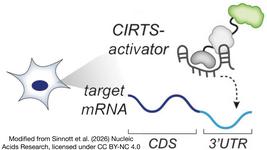
- German researchers have used inducible Cas9 and multiplexed guide RNAs to create hundreds of germ-line mutations in enhancers/promoters and 3′ UTRs of 16 genes in the worm C. elegans. After reproduction, the editing generated thousands of offspring containing a variety of mutations in these regulatory genes.
Tags
CLINICAL TRIALS
IND Enabling
Phase I
Phase II
Phase III
Gastric Cancer and Colorectal Cancer, CRC, (NCT07166263)
Sponsors:
Base Therapeutics (Shanghai) Co., Ltd.
Sponsors:
Base Therapeutics (Shanghai) Co., Ltd.
IND Enabling
Phase I
Phase II
Phase III
Relapsed or Refractory Acute Myeloid Leukemia, AML, (NCT06541444)
Sponsors:
Base Therapeutics (Shanghai) Co., Ltd.
Sponsors:
Base Therapeutics (Shanghai) Co., Ltd.
IND Enabling
Phase I
Phase II
Phase III