FT819 Remodels Lupus B Cells in Clinical Trial
CMN Briefs
May. 13, 2026

CMN Intelligence - The World’s Most Comprehensive Intelligence Platform for CRISPR-Genomic Medicine and Gene-Editing Clinical Development
Providing market intelligence, data infrastructure, analytics, and reporting services for the global gene-editing sector. Read more...

Aldevron, a biotechnology company supplying critical reagents and manufacturing services for gene and cell therapy, was among the industrial partners involved in the Baby KJ programme. That experience has helped shape the company's decision to engage with the European Genomic Medicine Consortium (EGMEDC), the pan-European initiative working to accelerate the clinical translation of genomic medicine across Europe.
Foti describes Aldevron's motivation in practical terms: the company wants to understand where the field is moving, where the barriers are, and how it can contribute to solutions.
»We want to advance the industry, no matter what country or continent we're working in,« he says. »Why it's important to be part of a consortium is, first, that we want to learn about the challenges and then figure out how to be a solution provider, an enabler, a catalyst for the industry.«
“The reason we found out about Baby KJ was because of relationships. If you don't have a network of relationships, it is difficult to understand the patient challenges”Tom Foti
Aldevron is not entering EGMEDC only as a sponsor. It is joining a network whose mission depends on the capabilities Aldevron can provide, including molecular components, manufacturing experience, quality systems, and release testing. Many of the most persistent barriers in genomic medicine are practical, and progress in clinical translation often depends on the layer of work where Aldevron operates.
The Baby KJ case is central to how Foti explains Aldevron's interest in Europe. The treatment was developed under intense time pressure for a child with a life-threatening, rare genetic disease. For Aldevron, it showed that rapid genomic medicine requires trusted networks as much as technical capability.
»The reason we found out about Baby KJ was because of relationships,« Foti explains. »If you don't have a network of relationships, it is difficult to understand the patient challenges.«
Aldevron now wants to build similar connections with European clinicians, researchers and translational groups.
»We were on the radar for Baby KJ because we had those relationships in the US – and we need to build the same kind of connections in Europe,« Foti says. »So one of the key reasons to be part of this is to be at the centre of the field – to understand the challenges, and also the landscape more broadly.«
Europe has strong science in genomics, rare disease, CRISPR biology, cell therapy and clinical genetics. But its ecosystem is spread across national health systems, funding structures, clinical trial infrastructures and regulatory cultures. A pan-European consortium can make that landscape more navigable – and, for a manufacturing partner, more visible.
»People need to know that we're a willing partner,« Foti says. »If they don't know us, they won't contact us. If they do know us, then we have a chance to help.«
Aldevron is not a therapeutic developer. Foti describes the company as an 'anchor translational partner'.
»That means we've built a business model that allows clients to go from discovery through preclinical and into Phase I trials,« he says, adding that Aldevron also supports several clients commercially.
The phrase helps explain why the company fits into EGMEDC. Aldevron's role is not to set clinical priorities, but to help scientific concepts become clinically usable materials. That continuity matters because early technical choices in CRISPR programmes – material grade, characterisation, quality control assays, scalability – shape feasibility, cost and regulatory strategy years later.
Aldevron is a US-based biotechnology company headquartered in Fargo, North Dakota. Founded in 1998, the company supplies critical biological components used in life science research and in the development of advanced therapies. Its core activities include the production of plasmid DNA, mRNA, proteins, enzymes and other biologics for applications such as gene and cell therapy, gene editing, DNA and RNA vaccines, and immunotherapy.
Aldevron supports customers across research, preclinical, clinical and commercial development, with a particular role as a manufacturing and development partner rather than a therapeutic developer. In 2021, Aldevron was acquired by Danaher Corporation and now operates as a standalone operating company and brand within Danaher’s Life Sciences segment. In the Baby KJ case, Aldevron produced the mRNA component for the personalised CRISPR-based therapy.
The Baby KJ case also showed Foti that the usual structures around discovery, regulation and manufacturing can slow down innovation.
»Some of the challenges in translation are that often we have the wrong structures in place,« he says. »We have discovery structures, regulatory structures, and manufacturing structures – and often these structures or systems are not linked, inhibiting our collective ability to think more unconstrained.«
In KJ's case, the timeline forced all partners and the structures they operate in to rethink how they worked together. This dynamic allowed for more unconstrained thinking and barriers where quickly broken down.
»When the challenge came from the University of Pennsylvania and CHOP to do this work in six months – because the baby was going to die – we had to reimagine those structures and the linkages between all the partners needed to move quickly,« Foti says.
He explains that the programme required coordination across raw material, testing, regulatory and clinical partners. In his telling, a process that might usually take around 18 months was compressed to roughly five and a half months. It was an exceptional response to an exceptional case, not a new benchmark.
For EGMEDC, the question is how Europe can learn from such examples without relying on a crisis. Genomic medicine cannot be built on heroic exceptions alone.
As more CRISPR-related therapies move towards the clinic, some bottlenecks are becoming clearer. Foti points particularly to quality control, release testing and alignment between European jurisdictions.
»There are recurring challenges we see around QC and testing for clinical release – meaning that we may need testing that's more specific, more sensitive, or more clinically relevant,« he says. »Since this is a European consortium – alignment across the EU, or across countries, will also be important.«
He does not suggest Europe's challenges are unique. Across regulators in all geographies, he argues, there is a wider need to deepen scientific and technical understanding of new genomic modalities.
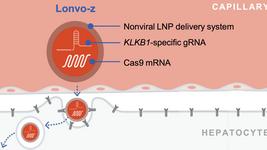
»People understand small molecules and large molecules (antibodies) – but it's more complicated to say: I have a drug product that's an mRNA-encoded editor,« he says. »An LNP encapsulated guide RNA with a mRNA editor goes to the liver, travels to the nucleus of the cells, scans the genome, locks onto the DNA, makes an edit, and then leaves the nucleus. This is a new paradigm for regulators and we all have to learn together what's best for the patient as these technologies evolve.«
His conclusion is direct: »We need to build more scientific depth and understanding within regulatory groups. This is going to require that scientists, clinicians and regulators form deep relationships and mutual understanding. «
“What I'm hoping for is well-structured meetings, continued learning, and open sharing of what the challenges are and what's needed in the industry”Tom Foti
On the question of whether more genomic medicine manufacturing should take place on the continent, Foti recognises the argument as valid but adds that resilience should not be defined only by geography. Strategic supply relationships, proven logistics and early planning matter as well.
Aldevron's US-based facilities, he says, already serve European clients and have sufficient capacity to support European programmes. EGMEDC, in that context, can host the more detailed conversation about what European programmes actually need in order to move safely and quickly.
For Foti, EGMEDC's value lies in structured dialogue, shared learning and connections that allow the right people to find each other sooner.
»What I'm hoping for is well-structured meetings, continued learning, and open sharing of what the challenges are and what's needed in the industry,« he says. »We need better information sharing and introductions to people who can help.«
He also sees a policy role, particularly in rare diseases, where conventional frameworks may not fully reflect the realities of genomic medicine.
»At a higher level, I also think we can help influence policy, especially around rare disease, so that laws make sense for genomic medicine,« he says. »Many of the current frameworks are somewhat antiquated – they were written for a different time and don't reflect the current state of the industry.«
That does not imply lower standards. The credibility of genomic medicine depends on rigorous safety, quality and clinical evaluation. But it does suggest that regulation must be informed by current science and by the practical realities of manufacturing and delivery.
The European Genomic Medicine Consortium (EGMEDC) is a pan-European, non-profit initiative convened by CRISPR Medicine News. Its purpose is to accelerate the clinical translation of genomic medicine in Europe by bringing together stakeholders across research, clinical practice, industry, regulation, policy and patient-facing environments.
EGMEDC focuses particularly on CRISPR-based and other advanced genomic therapies, where progress depends not only on scientific discovery, but also on coordinated infrastructure, regulatory alignment, manufacturing readiness, clinical expertise and patient access. The consortium aims to create a forum for knowledge-sharing, collaboration and policy dialogue, helping European actors identify bottlenecks and develop more practical routes from laboratory innovation to clinical application.
The relationship between Aldevron and EGMEDC is best understood as one of mutual dependency.
Aldevron is interested in expanding into Europe's genomic medicine ecosystem: its clinicians, scientists, patient needs, emerging programmes and policy discussions. Without that visibility, even a capable manufacturing partner may be absent from the moments when its expertise could make a difference.
EGMEDC, in turn, needs partners that understand the practical conditions under which genomic medicines can be manufactured, tested, released and scaled. Without that input, there is a risk that discussions about translation remain too abstract.
Baby KJ showed what can happen when those elements come together under extraordinary pressure. The task for Europe is to build systems that make collaboration possible earlier and more systematically – so that the right connections between patients, clinicians, researchers, manufacturers, regulators and technical experts happen before crisis forces them.
For Aldevron, joining EGMEDC is a way to be part of that work. As Foti puts it, the company wants to be »at the centre of the field« – to understand the challenges, the landscape and where it can help. For EGMEDC, the partnership brings manufacturing and translational expertise into the conversation at the point where Europe's genomic medicine ambitions must become practical, scalable and clinically actionable.
To get more CRISPR Medicine News delivered to your inbox, sign up to the free weekly CMN Newsletter here.
ArticleInterviewNewsIn vivoLipid-based nanoparticleRare DiseaseEGMEDCEGMEDCmemberPatientsQuality ControlCRISPR-CasRegulationsTrials