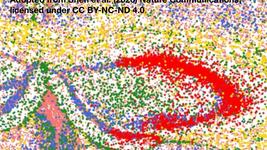
Spatial CRISPR maps gene effects in the brain
CMN Briefs
Feb. 23, 2026


CMN Intelligence - The World’s Most Comprehensive Intelligence Platform for CRISPR-Genomic Medicine and Gene-Editing Clinical Development
Providing market intelligence, data infrastructure, analytics, and reporting services for the global gene-editing sector. Read more...
CRISPR technology is now routinely used to knock out or repress genes at scale, yet most pooled screens still rely on indirect phenotypes such as cell survival or fluorescent reporters. In their recent Nature Communications study, the Chinese researchers push CRISPR screening into new territory by making RNA splicing itself the primary readout.
“SPLiCR-seq provides a more direct, efficient, and precise approach for identifying splicing regulators across diverse biological settings”Qianqian Ying et al.
Their platform, SPLiCR-seq, couples CRISPR interference with next-generation sequencing, allowing thousands of genetic perturbations to be functionally linked to precise splicing outcomes in a single experiment. Rather than inferring splicing from downstream protein signals, the approach directly measures RNA processing, thereby strengthening the causal link between gene perturbation and molecular phenotype.
»SPLiCR-seq provides a more direct, efficient, and precise approach for identifying splicing regulators across diverse biological settings,« the researchers note, describing how the system eliminates fluorescent proteins and cell sorting whilst enabling precise mapping of how gene disruptions affect splicing patterns.
The authors apply SPLiCR-seq to one of the most clinically relevant splicing events in cell stress biology: the unconventional splicing of XBP1 mRNA during the unfolded protein response. This reaction, catalysed by the ER sensor IRE1α, plays central roles in cancer cell survival, immune cell function and resistance to therapy.
By performing CRISPR screens across RNA-binding proteins and then genome-wide, the study maps a broad regulatory landscape controlling IRE1α–XBP1 signalling under different forms of ER stress. Many hits fall into pathways already implicated in proteostasis, validating the approach, while others reveal previously hidden layers of regulation.
A particularly striking finding is the identification of GADD34 (encoded by PPP1R15A) as a positive regulator of XBP1 splicing. GADD34 is widely recognised in medicine as a stress-induced factor that helps cells recover by reversing translational shutdown through dephosphorylation of eIF2α. CRISPR-mediated repression of GADD34, however, produced a clear and reproducible reduction in XBP1 splicing and IRE1α activation.
Follow-up experiments showed that this effect is independent of eIF2α and instead reflects a direct physical interaction between GADD34 and IRE1α at the ER membrane. As the authors put it, »GADD34 directly interacts with IRE1α and functions independently of its canonical role in eIF2α dephosphorylation.«
“Pharmacological inhibition of GADD34 using Sephin1 effectively suppressed XBP1 splicing and alleviated CAR-T cell exhaustion in an ex vivo model, leading to enhanced tumour-killing capacity across multiple cancer models”Qianqian Ying et al.
The medical relevance of this discovery becomes apparent when the authors turn to immunotherapy. Chronic activation of the IRE1α–XBP1 pathway has been linked to T cell exhaustion, a major limitation of CAR-T cell therapies in solid tumours.
Using an ex vivo exhaustion model, the study shows that pharmacological inhibition of GADD34 with Sephin1 suppresses XBP1 splicing in CAR-T cells and preserves their effector function across repeated tumour challenges. Treated CAR-T cells maintained higher cytokine production and tumour-killing capacity, suggesting that modulating ER stress signalling could make engineered T cells more durable in hostile tumour environments.
»Pharmacological inhibition of GADD34 using Sephin1 effectively suppressed XBP1 splicing and alleviated CAR-T cell exhaustion in an ex vivo model, leading to enhanced tumour-killing capacity across multiple cancer models,« the study reports.
More broadly, the work illustrates how CRISPR screening is evolving from a gene-discovery tool into a platform for mechanistic and translational insight. By directly linking CRISPR perturbations to RNA processing events, SPLiCR-seq enables systematic dissection of splicing pathways implicated in cancer, neurodegeneration, and immune dysfunction.
The authors note that the CRISPR-based platform proves applicable beyond XBP1 to disease-relevant splicing events, including SMN2 in spinal muscular atrophy, LMNA in progeria, and MAPT in Alzheimer's disease and frontotemporal dementia. The discovery that GADD34 inhibition enhances CAR-T immunotherapy offers immediate translational promise, with future in vivo studies needed to establish whether this approach can improve outcomes in cancer patients receiving cellular immunotherapies.
The study was led by Yang Xu and Ruilin Tian at Southern University of Science and Technology in Shenzhen, China. It was published in Nature Communications on 19 December 2025.
To get more CRISPR Medicine News delivered to your inbox, sign up to the free weekly CMN Newsletter here.