CMN Weekly (6 March 2026) - Your Weekly CRISPR...
CMN Weekly
Mar. 6, 2026

CMN Intelligence - The World’s Most Comprehensive Intelligence Platform for CRISPR-Genomic Medicine and Gene-Editing Clinical Development
Providing market intelligence, data infrastructure, analytics, and reporting services for the global gene-editing sector. Read more...
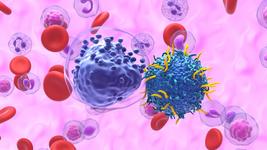
Idiopathic pulmonary fibrosis (IPF) carries a median survival of 3–5 years post-diagnosis, and current antifibrotic drugs slow but do not reverse disease progression. The STING signalling pathway in alveolar macrophages has emerged as a key driver of chronic inflammation and fibrotic remodelling in IPF, but delivering therapeutics selectively to these cells in the distal lung remains a major obstacle.
To address this, the team developed phosphatidylserine-modified lipid nanoparticles (DOPS LNPs) and optimised them through a systematic orthogonal screening strategy. The phosphatidylserine surface modification was designed to promote selective uptake by macrophages. Loaded with Cas9 mRNA and a Sting1-targeting sgRNA, the formulation outperformed commercial LNPs by more than sevenfold in macrophage expression efficiency.
Following inhalation in mice with bleomycin-induced fibrosis, the nanoparticles accumulated preferentially in alveolar macrophages, achieving a Sting1 indel frequency of 59.73% after three inhalations. The treatment reduced collagen build-up in the lungs and lowered fibrosis scores, indicating less severe tissue damage, while lung function improved across several measures after treatment. On the safety side, deep sequencing found no meaningful editing at any of the five predicted off-target loci, and repeated dosing did not produce a detectable anti-SpCas9 antibody response. Together, these findings support a safety and tolerability profile compatible with repeated dosing.
Yang Liu and Chengqiong Maob at South China University of Technology and Guangzhou Medical University, respectively, led the study. It was published in Molecular Therapy on 6 March 2026. https://doi.org/10.1016/j.ymthe.2026.03.003
To get more CRISPR Medicine News delivered to your inbox, sign up to the free weekly CMN Newsletter here.