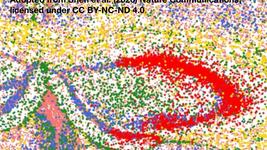
Spatial CRISPR maps gene effects in the brain
CMN Briefs
Feb. 23, 2026


CMN Intelligence - The World’s Most Comprehensive Intelligence Platform for CRISPR-Genomic Medicine and Gene-Editing Clinical Development
Providing market intelligence, data infrastructure, analytics, and reporting services for the global gene-editing sector. Read more...
Achieving precise gene correction through homology directed repair (HDR) remains challenging in CRISPR-Cas9 applications, as the less accurate non-homologous end joining (NHEJ) pathway typically dominates after DNA cleavage. To address this limitation, the team constructed a dual-selection screening platform in human cells – employing diphtheria toxin resistance to identify cells that successfully underwent HDR at the HBEGF gene, whilst simultaneously monitoring EGFP disruption to assess off-target effects.
By screening a library of SpCas9 variants carrying random mutations in the nuclease domain, they identified HSS Cas9, which harbours two previously unreported mutations (I795V and K918E). This variant demonstrated superior HDR efficiency compared with wild-type Cas9 particularly at target sequences with 50–60% GC content, including EMX1, VEGFA, ATP7B and GRN loci.
The editing precision improved further when HSS Cas9 was combined with cell cycle-dependent activation through AcrIIA4-Cdt1 co-expression and phosphorothioate-modified single-stranded donor templates, achieving HDR-to-indel ratios exceeding those of standard approaches by several fold.
The study was led by Daisuke Matsumoto and Wataru Nomura from Hiroshima University. It was published in the Journal of Biomedical Science on 3 December 2025.
To get more CRISPR Medicine News delivered to your inbox, sign up to the free weekly CMN Newsletter here.